Mathematical Tradition at the Hosts
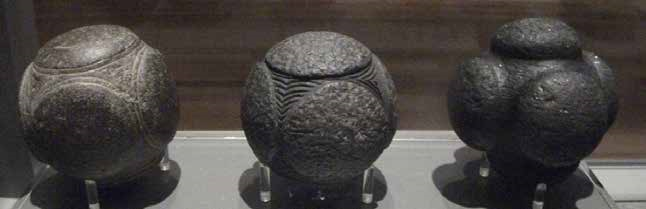
The mathematical tradition within the UK and Ireland stretches back hundreds, if not thousands, of years. In neolithic times, well before Euclid, the peoples inhabiting the northeast of present-day Scotland had a profound appreciation of symmetry, and they crafted stone balls with the symmetries of regular solids.
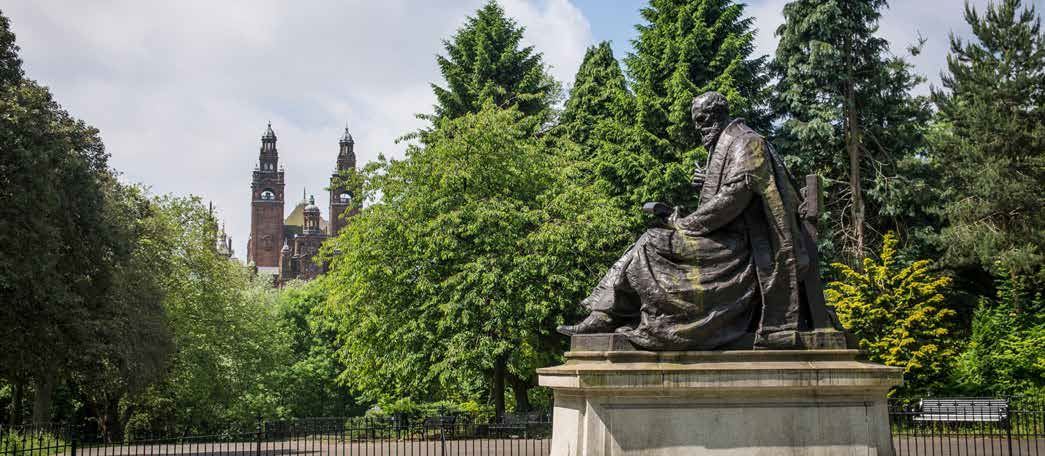
Statue of Lord Kelvin, in Kelvingrove Park, Glasgow
With the work of Napier in the early 17th Century Scotland, logarithms were introduced. This galvanized our ability to perform calculations, and these methods and tables were used throughout Europe by astronomers such as Kepler. Within the UK, the later parts of the 17th century witnessed a profound shift in mathematical and scientific knowledge, driven in large part by Newton’s Principia Mathematica and the advent of calculus.
The Scottish enlightenment mathematicians Stirling and Maclaurin were early adopters of Newtonian ideas, and Simson reinvigorated Euclidean geometry with his work on porisms. Simson’s edition of Euclid became a standard text, and Thomas Jefferson owned a copy. Mathematics was a core part of the curriculum in the four ancient Scottish Universities, and this influence on the rigour of thought can be found in the workings of luminaries such as Adam Smith and David Hume.
In the 19th Century in Ireland, Boole introduced Boolean algebra and laid the foundations of the information age, and Hamilton revolutionized mechanics. The work of Lord Kelvin in Glasgow and James Clerk Maxwell in Edinburgh revolutionised thermodynamics and electromagnetism, and our mathematical understanding of both. The subsequent laying of the first transatlantic cables, guided by Kelvin, can be claimed to be an early precursor of the internet, and the interconnectivity that now drives science across the globe.
The 19th Century also witnessed the first stirrings of more progressive policies in education, as the year 1898 saw the first women in Scotland to graduate in Mathematics and Natural Philosophy, with Elizabeth Pettigrew Taylor (Glasgow) and Margaret Murray (St. Andrews) graduating with first class M.A. degrees.
The 20th century witnessed similar revolutions. Memorable figures, who have inspired mathematicians and historians alike, include Hardy and his relationship with Ramanujan: a prime example of UK mathematicians collaborating with global talent. The Principia Mathematica of Russell and Whitehead, in logic and the foundations of mathematics, influenced the development of formal systems and analytic philosophy globally, including both the Vienna Circle and American logicians. Women being able to access higher levels of education produced influential figures like Mary Cartwright, a pioneer in the study of chaos, and the first woman to be awarded the De Morgan Medal, the highest award of the London Mathematical Society. The strength, breadth and influence of UK mathematicians remain as strong as ever. Those ranks today include Andrew Wiles, known for his proof of Fermat’s last theorem, together with multiple Field medallists, and many other high calibre mathematicians.
Throughout the above, the whole of the 20th century, and up until today, the mathematical traditions throughout the UK and Ireland have remained strong. Mathematics is the most popular post-16 subject in our schools, and our universities are seeing an increasing number of students studying our subject. Our research base – supported by our learned societies, our National Academies, our funding bodies, the Newton Institute (Cambridge) and the International Centre for Mathematical Sciences (Edinburgh) – is amongst the best in the world. Now, as for the past hundreds of years, it remains open to new ideas, to new people and to new collaborations, and these traditions form the foundation of our ICM bid.
Mathematical Capacity of the Hosts
There are between 3000 and 4500 permanent faculty members working in university mathematics departments in the UK and Ireland, and many more in neighbouring fields such as computer science and the mathematically oriented parts of physics and engineering. Together with the fact that both countries are exceptionally well connected, this creates a vibrant mathematical culture in which seminars and the exchange of ideas are the norm, and in which all areas of mathematics are represented, and thrive. From their multiple learned societies funding activity across the countries that both strengthen research and the bonds holding it together, to the focus on supporting early career researchers, and to the openness of their universities in hiring the best of mathematical talent from across the world, the host countries have a significant, substantial, and welldeveloped mathematical capacity with many global connections.
Collaboration
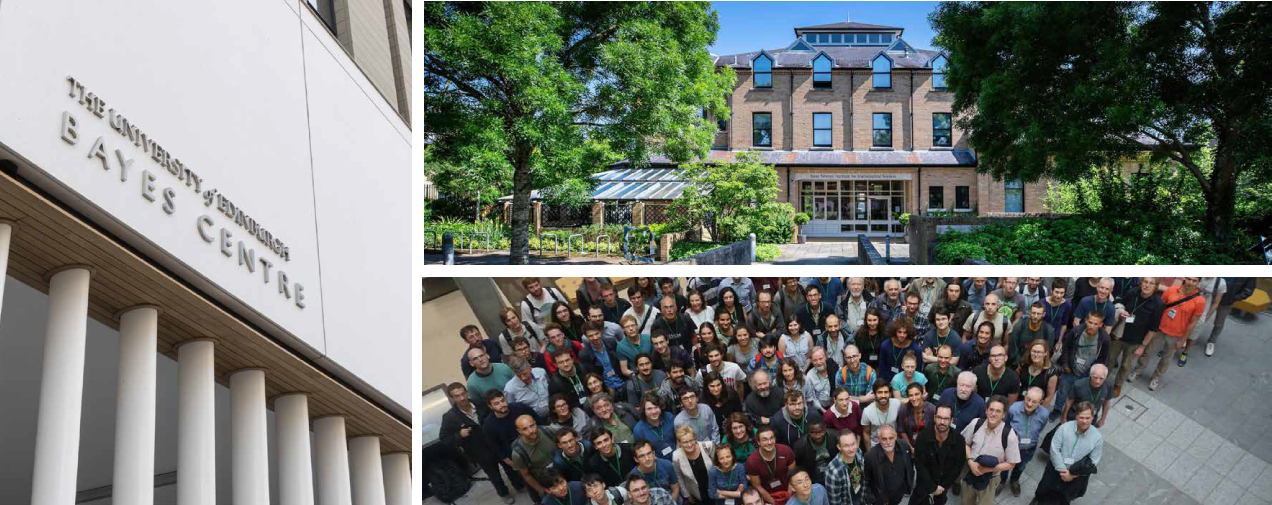
The spirit in which we submit this multi-country bid is one of collaboration: between people, between nations, between academic career stages, and between academics and the wider population. Both the UK and Ireland have furthermore significant capability and capacity within public outreach, outlined in more detail in p24-25, and this will be fully utilised in the lead-up to ICM2030 through a dedicated Maths Year for school-age children. Our bid will develop and inspire local talent, within a clear global outlook. The volunteers who will fill the halls of the ICM may be undergraduates and PhD students, but the impact on young students of mathematics of this ICM will be far more substantial.
Volunteers
The volunteers who will help deliver the ICM itself will be sourced from within the wide UK and Irish capacity, its network of thousands of PhD students (~40% of whom are international), together with the 250+ permanent research mathematicians, 250+ PhD students and 500+ undergraduate final year students in mathematics that reside within a one-hour commute of the proposed ICM location in both Glasgow and Edinburgh. This latter group are spread across four major universities, including two of the ancient founding universities of Europe.
We have furthermore partnered with the Martingale Foundation, a key provider of fully-funded maths PhD scholarships to students from low-socioeconomic backgrounds.
Experience In International Meetings
This bid benefits from substantial and sustained conference organisation experience, over multiple years, levels, and scales of event.
With regards to large-scale academic conferences, Glasgow has in very recent years hosted many 6000+ participant conferences. All have taken place in co-operation with our partners at the Glasgow Conference Bureau and have been hosted at our venue the Scottish Events Campus (SEC). This evidences both our capacity to host and our substantial experience of successfully hosting events similar in scale to the ICM.
Experienced Cities and Venues
Glasgow and our SEC venue successfully hosted the 2021 United Nations Climate Change conference COP26 which had over 40,000 registered participants, and Glasgow as a city will host the 2026 Commonwealth Games. These very large-scale events show the capacity within the city to absorb large numbers, and in particular evidence the hotel capacity of the city, which is substantial.
The capacity of Dublin, as the capital city of Ireland, to be a host city appropriate for the General Assembly is also well documented. Our venue for the General Assembly, the Royal Dublin Society, every year hosts events for hundreds of thousands of participants, and has substantial experience within a city which hosts multiple large conferences every year.
Experienced Organising Committee
With regards to large mathematical events, members of the Glasgow ICM2030 Bid Team formed the Exec Committee of the joint BMC/BAMC meeting in Glasgow in 2020/21, which is the largest mathematical meeting held in the UK, bringing together the pure and applied mathematics communities once every five years. This event was first scheduled to run in-person for 700 people in 2020 (cancelled due to covid), then it ran fully online in April 2021 for 900 participants. This direct experience, and the relationships that were built with key stakeholders within the city during that time, has been invaluable for this bid.
Furthermore, the international mathematics conference centre ICMS is less than one hour from the proposed ICM venue, and they will be actively involved in the organisation of the proposed ICM, primarily through their Maths for Humanity programmes which will help administer our Developing Countries Fund. Over the past 35 years the ICMS has coordinated hundreds of international events through the airports that we will use, and many mathematicians have experienced Scotland through their events.
Experienced Host Country